Jon Abbott8 takeaways for CISOs from the NCSC Annual Review 2026
AI has made attacks faster and cheaper, but the ways in haven't changed in a decade. ThreatAware CEO Jon Abbott picks out what matters most in the NCSC's latest report, and what CISOs should do about each point.
The NCSC's 2026 Annual Review, The State of the Cyber Nation, marks ten years of the National Cyber Security Centre. The report is 84 pages long, and much of it is about AI. But the most important line for security leaders comes in the first few pages.
In the foreword, NCSC CEO Richard Horne writes: "AI did not create these cyber security weaknesses; it revealed them. It exposed years of technical debt and the failure to implement even basic cyber protections."
For me, that sentence sums up the whole report. Attacks are getting faster and cheaper, but the ways in are the same ones we've known about for a decade. I've read the full report, and here are the eight takeaways I think matter most for CISOs, and what to do about each one.
1. AI is exposing old weaknesses, not creating new ones
So far, AI has not invented a new kind of attack. The NCSC's incident team has started to see attackers use AI tools, but none of those uses made a new class of attack possible. What AI does is make the old attacks easier, faster and cheaper, and lets more people carry them out.
The report's section on the threat opens with a list of attacks: state-backed espionage, attacks on power grids, and ransomware against telecoms and healthcare. They could all have happened this year, but they actually happened in 2015. The weaknesses attackers exploit haven't changed much in a decade, and neither has the way to stop them. As Security Minister Dan Jarvis says in the report, the basics of good cyber security are the same today as they were when the NCSC was set up ten years ago.
What to do: Treat AI as a reason to fix the basics faster, not as a reason to chase every new AI threat. Unpatched software and stolen passwords are still how most attackers get in.
2. Most incidents start in one of four ways
According to the NCSC's data, 88% of incidents at large organisations started in one of four ways:
- attackers exploiting a weakness in a public-facing website or app
- phishing
- the misuse of a genuine user account, often with stolen login details
- attackers exploiting a remote access service left open to the internet
None of these methods is new, and none requires much skill. In fact, one of the NCSC's lessons from the 337 incidents it handled is that even the most capable attackers don't need a clever way in. Their skill shows in what they do once they're inside.
What to do: Check your coverage against these four routes first. Do you know every internet-facing system you run? Is multi-factor authentication on every account that should have it? Are there old accounts that should have been removed?
3. Not knowing what you have is now a serious risk
When the NCSC lists the foundations of good cyber security, the first item is "knowing what technology you rely on". Everything else depends on it. You can't patch a device you don't know exists or protect an account that no one is tracking.
The NCSC also warns that, as AI makes weaknesses easier to find, organisations with "ageing technology, limited visibility of their technology estates and slow remediation processes" will struggle most.
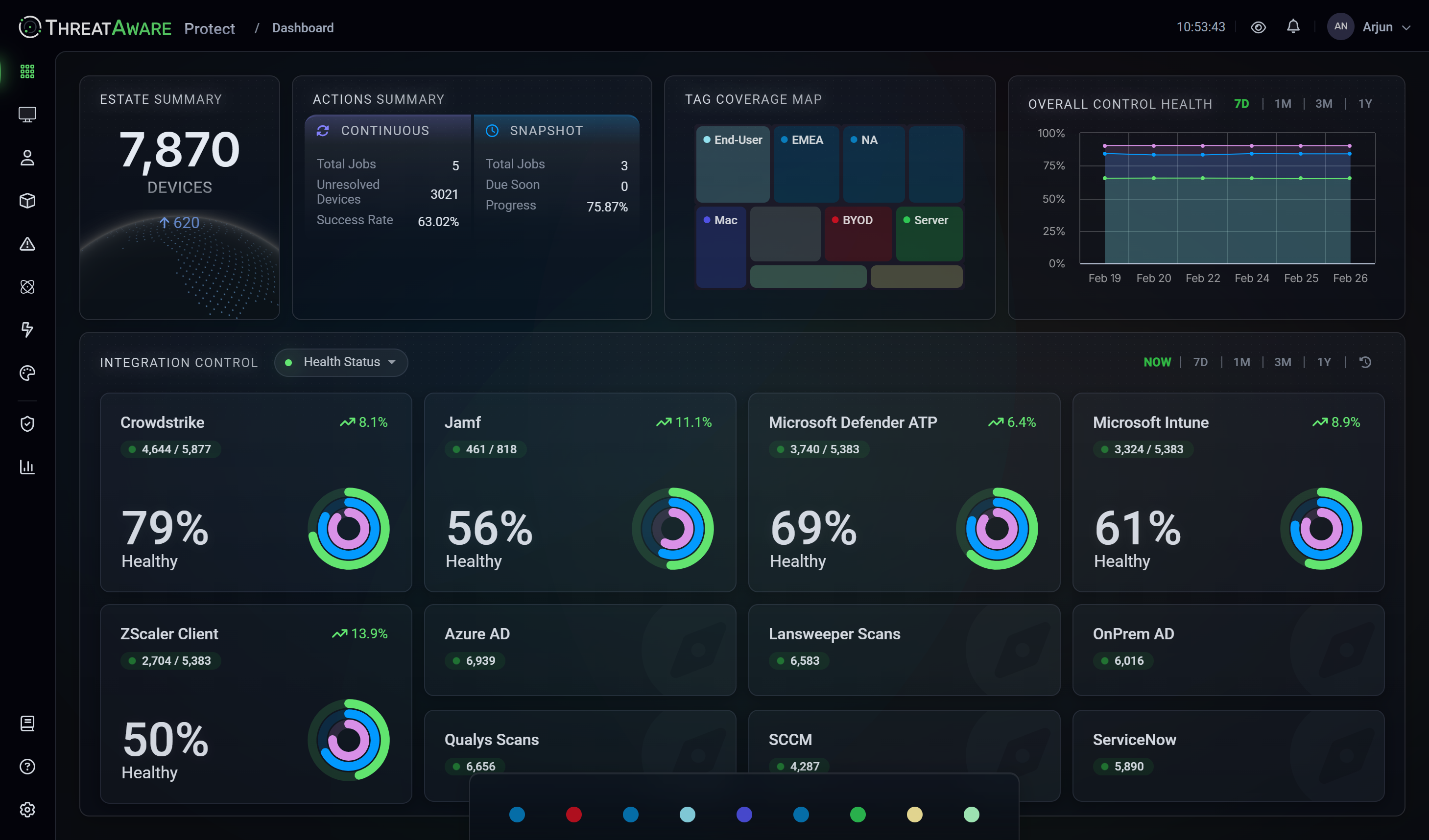
What to do: Make sure you have one accurate, up-to-date view of every device, user, application and cloud service, and of whether each one has the security controls it should. If that view relies on spreadsheets or several tools that disagree with each other, that's the first thing you need to fix.
4. A flood of urgent updates is on its way
AI models are now able to find security flaws in large amounts of code that have gone unnoticed for years. The NCSC expects this to trigger what it calls a "patch wave": a rush of software updates across all kinds of software and systems, as suppliers work to fix the flaws AI uncovers. Some of these fixes will be minor, but the NCSC expects a number of them to be critical.
The race is between defenders installing those fixes and attackers working out how to exploit the flaws first. The NCSC is asking organisations to plan to deploy updates "quickly, more frequently, and at scale", including across their supply chains.
What to do: Find out how long it currently takes you to install a critical update on every device that needs it, and which devices tend to get missed. You can only answer that if you know where every piece of software is running.
5. Staff using unapproved AI tools is a growing risk
Shadow AI now has the NCSC's attention. The report judges it highly likely that employees using unapproved AI tools will leave organisations open to both state-backed hackers and cyber criminals. When staff move company data onto personal devices to use these tools, organisations will almost certainly lose sight of how that data is handled and who can access it.
AI agents raise the same issue. Unlike a chatbot, an agent can take actions on its own across many systems at once. Organisations need to understand how agents are used and what access they have to systems and data.
What to do: Treat AI tools and agents like any other asset. Know which ones are in use, who is using them, and what data and systems they can access.
6. Boards should ask for proof, not policies
The NCSC wants boards to stop taking written policies as evidence of security. It says boards and executive teams should seek assurance "not only that policies exist, but that they can demonstrate measurable improvements in preparedness, recovery capability and resilience outcomes".
The NCSC is taking the same approach when it judges whether products and systems are secure. It's moving away from "static compliance gained from a one-off assessment" and towards asking for ongoing evidence that security is actually working.
What to do: Report to your board with numbers that show real coverage and how it is changing over time, such as the share of devices fully patched or accounts protected by multi-factor authentication. A policy is just a record of what should be happening, but hard evidence gives you the reality on the ground.
7. Your supply chain can be your weak spot
Organisations increasingly rely on suppliers, service providers and other third parties for critical work. The NCSC warns that weaknesses anywhere in that chain can expose you to risks beyond your direct control. Attackers know this. They go after suppliers because a weakness in one organisation can give them access to many others.
The 2025 attack on Jaguar Land Rover shows how far a single incident can spread. The NCSC says the attack had significant impacts across the supply chain, hitting suppliers that relied on JLR's production schedules, orders and payments. JLR reported around £196 million in direct costs, and the attack had a direct impact on UK GDP.
What to do: Understand which suppliers you depend on and which ones have access to your systems and data and build security requirements into how you choose and manage them. The NCSC's Supplier Check Tool lets you check the Cyber Essentials status of large numbers of suppliers at once.
8. Tougher rules are on the way
The Cyber Security and Resilience Bill, which Dan Jarvis calls the biggest update to UK cyber regulation in years, will bring important new sectors into scope and give the government new powers to respond to crises. The NCSC has also published the CAF Core Profile, its recommended minimum standard for essential services and other organisations critical to the UK.
But the goal here isn't just ticking regulatory boxes. The NCSC says resilience "requires more than compliance": organisations need to understand the systems, technologies, suppliers and dependencies their critical services rely on.
What to do: Work out whether the Bill is likely to affect your organisation and start using the CAF Core Profile as a baseline now rather than waiting. If you are brought into scope, you'll need to prove your security measures to regulators, so start gathering that evidence early.
The common thread
AI has made attackers faster, but it hasn't changed what organisations need to do to stop them. The tools and standards needed to protect against both conventional and AI-powered attacks already exist. The challenge now is putting them in place quickly and at scale.
That starts with knowing what you have and whether it is protected. Without that view, you can't close the four common routes in, keep up with the patch wave, see your shadow AI, or show your board real evidence. That cyber hygiene gap is the problem ThreatAware was built to solve.
Secure Every Device in Your Network
Instantly uncover and protect every asset in your IT estate with ThreatAware.
Identify unknown devices, reconcile asset data across platforms, and eliminate security gaps to ensure continuous cyber hygiene.
Book a Demo